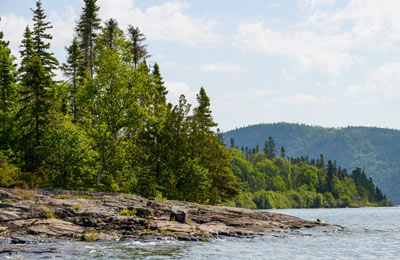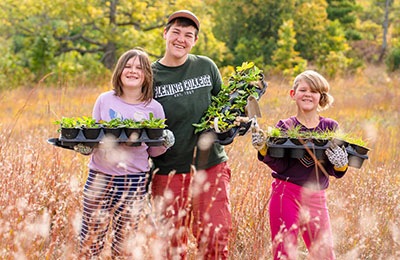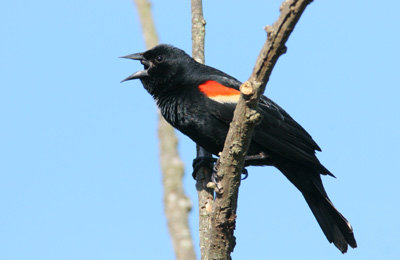
The Nature Conservancy of Canada's first project in Ontario was the conservation of Cavan Swamp in 1969, a type of wetland supporting numerous orchid species, muskrat, beaver and waterfowl. Since then we have completed more than 130 projects that protect more than 42,000 acres (17,000 hectares) of this province's most ecologically significant land and water. Today, the Ontario Region continues to work with our partners to conserve Ontario's natural heritage.
A living fossil makes a comeback
Get happy: get outside!
This spring and summer, get out and volunteer with us, or take a trip to one of NCC's conservation masterpieces and experience what's unique in Ontario. Take a walk through an old-growth forest or visit a wetland and take a quiet paddle as you look for great blue herons. Whatever you choose to do this year, be sure to get outside!
The McMichael Tree Project
Come out and enjoy art and nature as the Nature Conservancy of Canada (NCC) partners with the McMichael Canadian Art Collection to promote The McMichael Tree Project. This project celebrates the artistic, cultural and natural aspects of the tree, with two breathtaking exhibitions, a variety of programs and special installations.
Who cooks for you? That is the question...
In early spring 2011, I set out to the Nature Conservancy of Canada’s Maurice property, located on the Penetang Peninsula on Georgian Bay. I was extremely eager to start the field season, especially after what felt like the world’s latest start to spring in my lifetime. I’d been studying my trees, my flowers, my mammals, my snakes, my frog calls and, most especially, my bird songs – I was ready to take on anything nature had to show me!
Picnicking with a bear on the Frontenac Arch
It’s a tadpole! No, it’s a turtle! No, it’s....?
It was a warm, sunny July day on the northern Bruce Peninsula with a gentle breeze coming off the lake. Tanya Pulfer (a conservation biologist in NCC's Ontario Region), Joe Crowley (an Ontario Ministry of Natural Resources herpetology species at risk specialist) and I had spent the better part of the week searching for massasauga rattlesnakes on NCC properties.
A slithery surprise!
Southwestern Ontario field staff got quite a surprise this past November, on a property located on Pelee Island — Canada’s most southerly, inhabited point. Mhairi McFarlane and Jill Crosthwaite were working at figuring out which plants grow where and were documenting changes in soil depth. Intent on our work, we were walking with our heads down, taking fieldnotes, GPS waypoints, and looking at plants. When suddenly...
Announcing NCC's Regional Vice President in Ontario, James Duncan
Saving wildlife in distress
Nature Conservancy of Canada protects 610 acres in the Frontenac Arch region
Hazel Bird Nature Reserve: A legacy for the birds
The Acquisition of 544 Acres Along Gauley Bay Shore Protects Globally Rare Hill's Thistle in Ontario
Canard Valley Conservation Area Grows Thanks To Public-Private Partnership
Happy Canada Day
In celebration of the many gifts from Canadians who care about our natural heritage, and in time for Canada Day, the Nature Conservancy of Canada (NCC) announces the conservation of almost 2,700 acres (1,092 hectares) of the internationally important Turkey Point Marsh, located on the northern shore of Lake Erie.
The Nature Conservancy of Canada Commends the Province of Ontario's Biodiversity Strategy
The Nature Conservancy of Canada, Canada?s leading non-profit land conservation organization, congratulated the Premier of Ontario and his government for their updated strategy recognizing the critical need to protect the province?s natural biodiversity. NCC was pleased to see the Province take a lead role in the development of Ontario?s Biodiversity Conservation Strategy 2011, as well as to be involved with its development.
North Bear Alvar Gives a Boost to Conserved Land on Carden Alvar
Earth Day is looming, and just in time, the Nature Conservancy of Canada is pleased to announce the conservation of North Bear Alvar, just east of Orillia. Conserved in partnership with the Couchiching Conservancy, the Government of Ontario, the Government of Canada, and with generous donations from individuals, this project adds another 787 acres (318 hectares) to the growing network of conservation lands on the Carden Alvar.
Internationally Important Wetland Conserved in Southern Ontario
Protecting Wildlife Pathways; Giving Species Space to Move
The Nature Conservancy of Canada (NCC) today officially announced the conservation of 590 acres (239 hectares) in an area known as the Frontenac Arch. The Arch provides a critical ecological connection between the Algonquin Highlands region of Ontario and the Adirondack Mountains of New York State; the Freeman property represents a key success in maintaining that corridor.
-
Carden Alvar Natural Area
Located northeast of Lake Simcoe, the Carden Alvar Natural Area is an outstanding example of globally threatened alvar habitat combining alvar grasslands, shrublands, forests and wetlands and is critical to the survival of globally rare communities and the endangered eastern loggerhead shrike.
Rice Lake Plains Natural Area
Frontenac Arch Natural Area
Northwestern Lake Superior Coast Natural Area
Western Lake Erie Islands Natural Area
Southern Manitoulin Island Coast Natural Area
Happy Valley Forest
Minesing Wetlands
Lower Maitland River Valley Natural Area
The Lower Maitland River Valley Natural Area is part of the Eastern Great Lakes Lowland Forests region, which occurs as a narrow band stretching from the central shores of Lake Huron in Ontario, across the north shore of Lake Ontario and along the St. Lawrence River corridor into Quebec and northern New York State.
North Bear Alvar
Scheck Nature Reserve
Wilson Island
Elbow Lake
-
Menzel Centennial Park, Napanee Plain, ON
-
Carden Alvar, ON
-
Frontenac Arch, ON